


Commercial Restroom Plumbing
LehiMarch 2026
- Problem
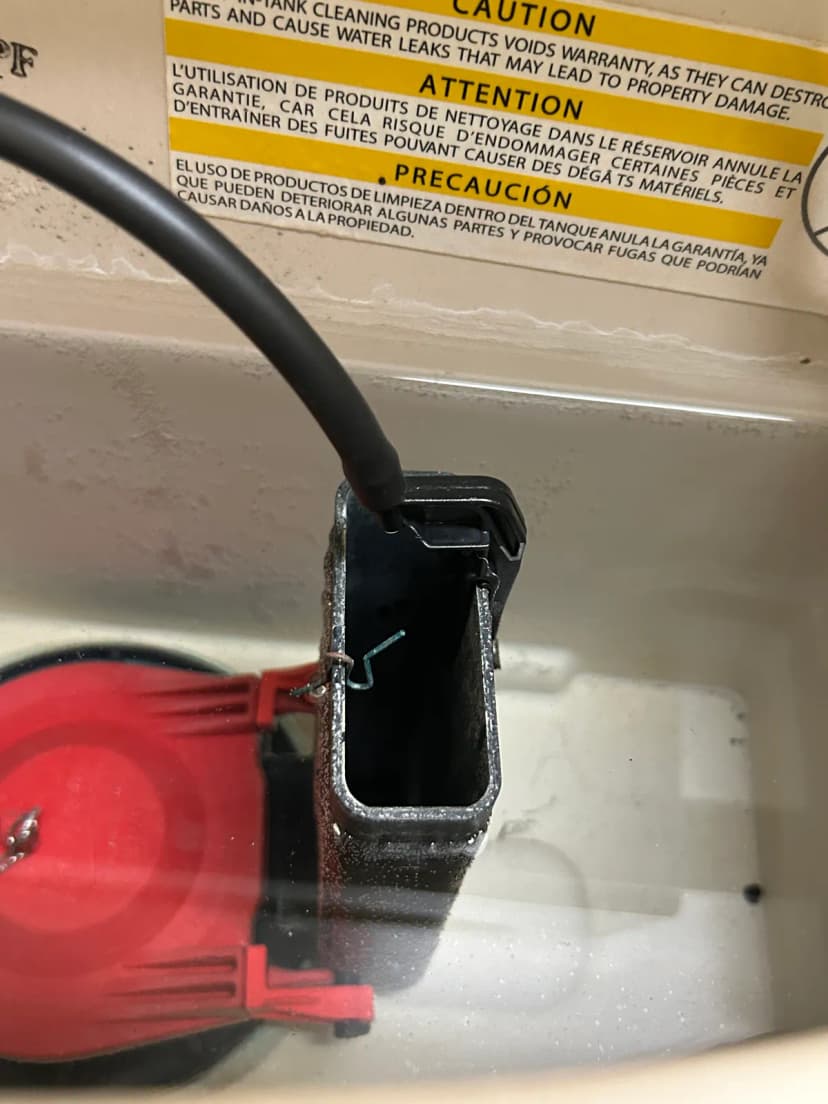
- A Kohler toilet in a women's restroom needed to be rebuilt.
- What we did
- We rebuilt it with a new flapper and fill valve, and replaced all the gaskets, nuts, and bolts.
Commercial restroom plumbing is the repair and replacement of the toilets, urinals, faucets, sinks, and drains in a public or staff restroom. Call when a toilet or urinal runs or will not flush, a faucet will not shut off, or a floor drain backs up. We do this work across northern Utah. Estimates are free.
What to expect
The price before any work starts
A free estimate first. No surprise on the bill.
You know who is coming
A text with your plumber's name before we arrive
We show up when we say
If we are running late, you hear from us first
No upsell. No is fine.
We fix what you called about. You decide anything else.
Commercial restroom plumbing covers every fixture in a public or staff restroom and the pipes behind it. That includes:
The backflow assembly on the building's water service is a separate job with its own rule. Utah Administrative Code R309-105-12 says backflow assemblies shall be inspected and tested at least once a year by a certified individual (source). Our backflow testing page explains the test. For a repair or a set of new fixtures, ask for a commercial quote.
A flush valve that keeps running has a worn part or debris inside it. A flush valve (flushometer) has no tank. It uses the pressure in the supply pipe, and a rubber diaphragm or a piston inside meters each flush. The common causes:
The usual fix is a rebuild with new parts matched to the fixture, or a new valve. Hard water leaves scale on these parts. Salt Lake City's 2026 Water Quality Report lists total hardness of 8.0 to 12.4 grains per gallon at its three treatment plants (source). Pressure varies too. Saratoga Springs says water pressure in the city can vary from 40 to 150 psi (source).
A restroom floor drain smells when its trap has dried out, and it backs up when the line past it is clogged. The trap is a U-shaped bend under the drain that holds water. That water blocks sewer gas. A floor drain that rarely gets water loses its seal to evaporation, and the smell comes up through the dry trap. A gallon of water poured into the drain refills it. If the smell keeps coming back, the trap primer, a small valve that feeds the trap, may have failed, or the trap may be cracked.
A backup is a different problem. The floor drain is the lowest opening in the room, so it shows a clogged line first, often when toilets flush. If sewage comes up, keep people away from it and stop running water in that restroom. Paper towels, wipes, and grit from mop water are usual causes. Drain cleaning clears the line, and a camera shows why it clogged.
The ADA Standards set heights and clearances for the fixtures in an accessible restroom. Chapter 6 of the standards, published by the U.S. Access Board, includes these (source):
The standards have exceptions, and they are not the only rule. Which fixtures in your restroom must meet them is a decision for the building owner's designer or the local code official. The plumbing itself is installed under the 2024 International Plumbing Code, which Utah adopted with state amendments in Utah Code 15A-2-103, in the version in effect July 1, 2026 (source).
How a restroom repair is scheduled depends on the hours your building is open and how much of the restroom has to close. Tell us the hours we can work without getting in your customers' way, and who will let us in.
How much closes depends on the repair:
When you call, tell us how many restrooms the building has, which fixture is down, and whether it is a public or a staff restroom. A toilet or urinal that will not stop running can be shut off at its control stop until the repair. A person answers the emergency line 24/7.
Repair an old restroom fixture when the china and the valve body are sound. Replace it when it is cracked or corroded, or when it uses far more water than a current fixture. A flush valve can be rebuilt many times. A cracked bowl or a corroded valve body cannot.
Water use is the other reason. The EPA's WaterSense program says about 7 million flush-valve toilets in the United States have flush volumes as high as 3.0 to 7.0 gallons per flush. The federal standard is 1.6, and labeled models use no more than 1.28 (source). For urinals, the federal standard is 1.0 gallon per flush, and labeled models use no more than 0.5 (source).
The valve and the fixture have to match. A low-flow valve on a bowl made for a bigger flush clogs more, so the two are often replaced together. Scale counts too. Provo's 2025 Water Report lists typical hardness of 10–15 grains per gallon (source), and scale builds up in aerators, sensor faucets, and flush valves.
We give free estimates and do not post prices. These are the things that change the cost of commercial restroom plumbing:
We tell you the cost before we start the work.
| Symptom | Likely cause | Usual fix |
|---|---|---|
| Toilet or urinal runs without stopping | Plugged bypass or torn diaphragm in the flush valve | Rebuild or replace the flush valve |
| Weak or short flush | Worn diaphragm, partly closed control stop, or low supply pressure | Rebuild the valve, open the stop, or check the supply |
| Water leaks at the flush handle | Worn handle seal | Replace the handle parts |
| Sensor faucet or flush valve does not respond | Dead batteries, lost power, a dirty sensor, or a failed solenoid | Restore power, clean the sensor, or replace the failed part |
| Faucet drips or will not shut off | Worn cartridge, or scale inside the faucet | Replace the cartridge or the faucet |
| Floor drain smells | Dry trap or failed trap primer | Refill the trap and repair the primer |
| Floor drain backs up when toilets flush | Clog in the main drain line | Clear the line |
What it costs
A leak behind a wall and a leak under a sink are different jobs, and so are a short gas line and a long one. We look at the work, then give you a price. The estimate is free.
Larger jobs can be paid over time through Wisetack.
See financing optionsThe visit
Tell us what you see. If a pipe is leaking, we tell you which valve to close.
You get a text with your plumber's name before we arrive. Shoe covers go on at the door.
We find the cause, show you what we found, and give you the price.
We clean up, and the work is covered for 1 year.
1-year guarantee
100% satisfaction guarantee for 1 year after service
How the guarantee worksLehiMarch 2026
Is yours not here? Call (385) 338-6068 and ask. We would rather answer it than have you guess.
Close the control stop. It is the valve where the supply pipe meets the flush valve, usually behind a small cap. Most have a screw under the cap that turns clockwise with a flat screwdriver until the water stops. That shuts off one fixture and leaves the rest of the restroom working. Put an out-of-order sign on it and call for the repair.
A tank toilet stores each flush in its tank and has to refill before the next one. A flush valve, or flushometer, has no tank. It takes water straight from a larger supply pipe at building pressure, so it is ready to flush again in seconds. That is why busy restrooms use flush valves. They need a supply pipe and pressure sized for them, so few houses have them.
A sensor faucet that will not turn on usually has dead batteries, a loose power connection, a dirty sensor lens, or a failed solenoid valve. One that gives a weak stream often has scale or grit in the aerator or the inlet screen. Wipe the lens and check the batteries first. If it still does not run, the solenoid or the control module may need to be replaced.
Restroom sinks are usually fed through a mixing valve that blends hot and cold water to a safe hand-washing temperature. When that valve sticks or clogs with scale, the faucet runs cold, lukewarm, or too hot. The cause can also be the water heater or a recirculation pump that has stopped. A plumber checks the temperature at the faucet, then the mixing valve, then the heater.
Based in Lehi, working in nine counties.
Call or text and a person will answer. Estimates are free.
Office Mon to Fri, 7 am to 6 pm. Emergency line 24/7.
Opens in a new tab