StormWaters Plumbing

French drains and yard drainage in northern Utah

A French drain is a gravel-filled trench with a perforated pipe that collects ground water and carries it away from your house or yard. You need one when water pools in the yard, fills a window well, or presses against a basement wall. We design and install drainage across northern Utah. Estimates are free.

  • Free estimate
  • Price before work
  • 1-year guarantee

What to expect

  • The price before any work starts

    A free estimate first. No surprise on the bill.

  • You know who is coming

    A text with your plumber's name before we arrive

  • We show up when we say

    If we are running late, you hear from us first

  • No upsell. No is fine.

    We fix what you called about. You decide anything else.

How do I know if I need a French drain?

You need a French drain when water collects where it should not and has no path to leave. Look for these signs:

  • Puddles that stay in the yard long after the rain or the sprinklers stop.
  • A soggy strip of lawn along the foundation.
  • Water standing in window wells.
  • A damp basement wall, or water where the basement floor meets the wall.
  • Soil or mulch that washes out in the same place after every storm.
  • A yard that slopes toward the house.

Soil type matters. The Utah Geological Survey describes expansive soil as soil with high clay content that swells when wet and shrinks when dried. Clay drains slowly, so water sits against the wall.

Check the simple causes first. A downspout that dumps next to the foundation, or a sprinkler that soaks the wall, can look like a drainage problem.

Not sure it is the right fit? Call and describe your house.

How does a French drain work?

A French drain gives ground water an easier path than the one through your lawn or your basement wall. Water moves through loose gravel much faster than through packed soil. It drops into the gravel trench, enters the perforated pipe at the bottom, and follows the slope of the pipe to an outlet.

The parts are simple:

  • A trench with a steady downhill slope.
  • Filter fabric that lines the trench and keeps soil out of the gravel.
  • Washed gravel.
  • Perforated pipe.
  • An outlet: open ground lower on the lot, a dry well, a storm drain where the city allows it, or a sump pit.

A French drain works by gravity and uses no power. That is also its limit. It needs somewhere lower to send the water. When there is no lower spot, the drain feeds a sump pit and a pump lifts the water out.

What happens during a French drain installation?

A French drain installation follows these steps:

  1. We walk the property, find where the water comes from, and find where it can go.
  2. We request a utility locate. Blue Stakes of Utah 811 asks for notice at least 3 business days before excavation, and the service is free.
  3. We ask you about private lines. A gas line from the house to a barbecue or pool heater is not part of the free locate, and neither are sprinkler pipes.
  4. We dig the trench with a steady slope toward the outlet.
  5. We line the trench with filter fabric, add gravel, lay the pipe, and cover it with more gravel.
  6. We close the fabric over the top, build the outlet, and backfill.
  7. We put back the sod or rock and test the drain with water.

A short yard drain is a brief job. A long run, a deep drain beside a foundation, or a drain under a basement floor takes longer.

Rather ask a person? Call and we will answer it.

Where should a French drain not go?

A French drain in the wrong place can cause more trouble than the water did. We keep drains away from these spots:

  • Over buried utilities. Gas, power, water, and sewer lines get located and marked before we dig.
  • Below the footing, right beside the foundation. Digging deeper than the footing next to the wall can weaken the soil that holds up the house.
  • Through the roots of large trees. Roots get cut during digging, and later they grow into the pipe.
  • Toward a neighbor's lot, a sidewalk, or a driveway. The outlet has to release water where it will not flood someone else or turn to ice.
  • Into the sanitary sewer. Ground water does not belong there. For sump pumps, the Town of Mantua tells residents that emptying one into the sewer system is illegal.
  • On flat ground with no outlet. Without slope and a place to drain, the trench just holds water.

French drain or sump pump: which one do I need?

Use a French drain when the water has somewhere lower to go. Use a sump pump when it does not.

A French drain moves water by gravity. It suits a soggy yard, a wet strip along the foundation, or a hillside that sheds water toward the house. It uses no power and has no moving parts.

A sump pump lifts water up and out. It is the fix when ground water rises to the level of the basement floor, or when the lot is too flat for a drain to empty by gravity. It needs power, and it needs testing.

Many wet basements need both. A drain along the footing, or under the edge of the basement floor, collects the water and carries it to a sump pit. The pump sends it outside. The table below compares the two.


Rather ask a person? Call and we will answer it.

What affects the cost of a French drain?

We give free estimates and do not post prices. These are the things that change the cost of a French drain:

  • Length and depth. A long or deep trench takes more digging, more gravel, and more pipe.
  • Access. A tight side yard has to be dug by hand. An open yard can take a machine.
  • What is on top. Sod, sprinklers, concrete, pavers, and fences all have to be worked around or put back.
  • Soil. Heavy clay and rock are slower to dig than loose soil.
  • The outlet. Draining to open ground costs less than building a dry well or tying into a sump pit.
  • Interior drains. A drain under a basement floor means cutting and patching concrete.

Financing is available for larger jobs. Ask about it when we write your estimate.

Want a number for your house? Estimates are free.

How do I keep a French drain from clogging?

A French drain clogs when soil or roots get into the gravel and the pipe. Good construction prevents most of it, and a little care handles the rest.

  • Filter fabric around the gravel keeps fine soil out. A drain built without it fills with silt.
  • Washed gravel drains freely. Gravel that arrives dirty brings its own silt.
  • A cleanout gives access to flush the pipe with water.
  • Keep the outlet clear of leaves, grass, snow, and ice.
  • Extend the downspouts so roof water lands away from the house and does not overload the drain.
  • Do not plant trees or large shrubs over the trench.

The signs of a clogged drain are the same signs you started with: puddles that stay, or a wet wall. If they come back, call before the next storm.

French drains and sump pumps compared
FeatureFrench drainSump pump
How it moves waterGravity, through gravel and a sloped pipeA pump lifts the water up and out
Needs powerNoYes
Needs a lower place to drainYesNo
SuitsSoggy yards, wet strips along a foundation, hillsidesGround water at basement floor level, flat lots
UpkeepKeep the outlet clear; flush through the cleanoutTest before spring; keep the pit clean

What it costs

What moves the price on a pump job

A pump swap in a sound pit and a new pit with a discharge line are different jobs. We look at the pit, the pump, and where the water goes, then give you a price. The estimate is free.

  • Pump size and material
  • Whether a battery backup is added
  • The pit, the discharge line, and the check valve
  • Any drainage work needed outside

Larger jobs can be paid over time through Wisetack.

See financing options

The visit

What happens when you call about a sump pump

  1. 1

    Call or book

    Tell us what you see. If the pit is filling and the pump is not running, call the emergency line. A person answers 24/7.

  2. 2

    You know who is coming

    You get a text with your plumber's name before we arrive. Shoe covers go on at the door.

  3. 3

    We check the pump and the pit

    We test the pump, the float, and the discharge line, and give you the price before any work.

  4. 4

    You decide. We do the work.

    We clean up, and the work is covered for 1 year.

4.9

from 56 Google reviews

As of October 2026

Read all 56 reviews on Google Maps

If it is not right, we come back

100% satisfaction guarantee for 1 year after service

How the guarantee works

Recent jobs

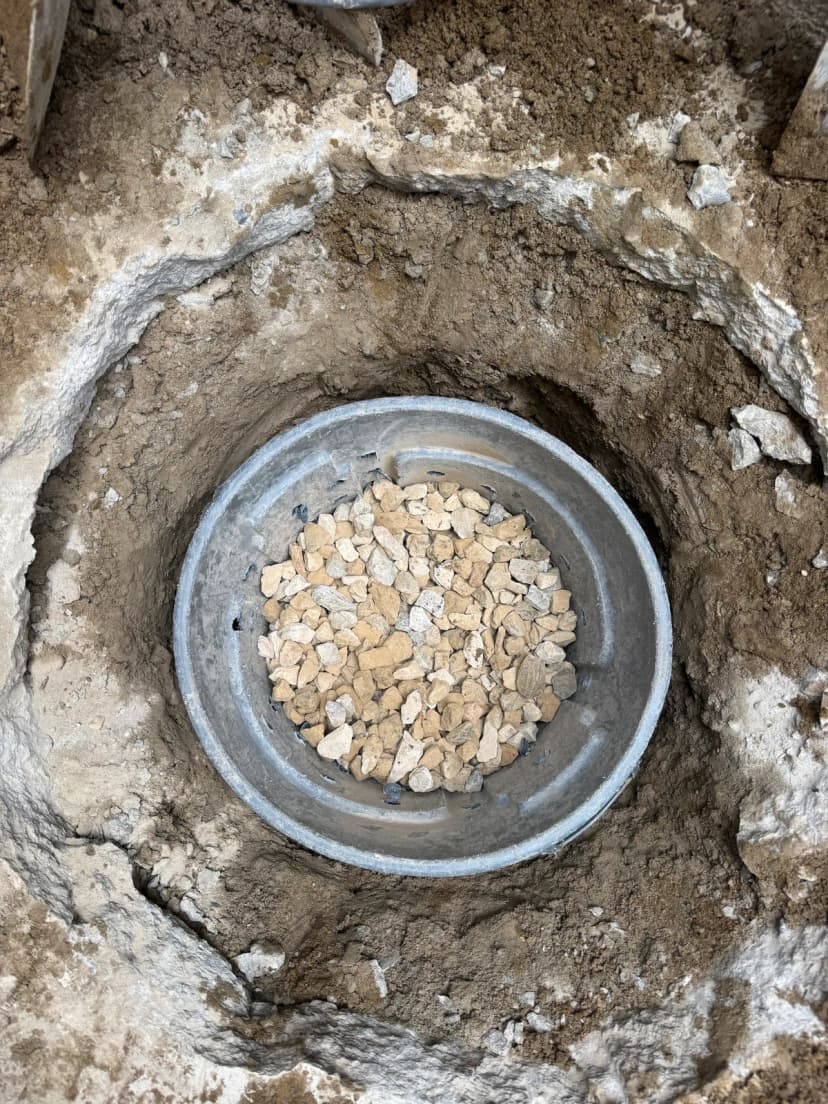
A metal drum filled with gravel, set in a hole dug through concrete.
Eagle Mountain, September 2026

French Drains and Drainage

Eagle MountainSeptember 2026

Problem
A walk-out basement entry needed a French drain.
What we did
We removed the concrete, installed the drain, and buried a 55-gallon drum filled with gravel to disperse the water underground, then replaced the concrete.

French Drains and Drainage

MapletonJuly 2026

Problem
A staircase needed a French drain added, and a bar sink needed its drain and water lines.
What we did
We broke up the concrete in the staircase and piped in the French drain with a 55-gallon bucket filled with gravel. We also piped in the drain and the water lines for the bar sink.

Sump pump questions

Is yours not here? Call (385) 338-6068 and ask. We would rather answer it than have you guess.

How deep does a French drain need to be buried?

Deep enough to catch the water you are trying to move, and no deeper. A French drain for a soggy lawn sits fairly shallow, because the water is near the surface. A drain that protects a basement sits lower, near the level of the footing. The trench also has to slope toward its outlet the whole way. We set the depth after we see where the water collects.

What are the downsides of installing a French drain?

A French drain means digging, so part of the lawn, the sprinklers, or the landscaping gets torn up and put back. It needs a lower place to send the water, and some lots do not have one. It can clog with silt or roots over time, especially without filter fabric. And it only handles ground water. It does not fix a roof, a gutter, or a plumbing leak.

My French drain is full of dirt. How can I clear it?

Start at the outlet. Clear away leaves, grass, and mud, and see if water runs. If the French drain has a cleanout, the pipe can be flushed with water from there. A plumber can run a camera through the pipe to find roots or a crushed section. If silt has filled the gravel itself, that stretch has to be dug up and rebuilt with filter fabric.

What is the typical lifespan of a French drain?

There is no fixed number. How long a French drain lasts depends on how it was built and what the soil is like. A drain with filter fabric, washed gravel, a steady slope, and a clear outlet keeps working for many years. A drain built without fabric in silty or clay soil can clog far sooner. Tree roots near the trench shorten its life.

How much does it cost to have someone install a French drain?

We do not post prices, because the cost depends on the yard. Length, depth, soil, access for equipment, and what has to be put back on top all change the cost of a French drain. A short drain across open lawn is a much smaller job than a deep drain beside a foundation. We walk the property with you and give you a free estimate.

French Drains and Drainage across northern Utah

Based in Lehi, working in nine counties.

Related services

Water in the basement? Call before the next storm.

Call or text. We check the pump and give you the price before any work.

Office Mon to Fri, 7 am to 6 pm. Emergency line 24/7.