


Expansion tank replacement
FarmingtonApril 2026
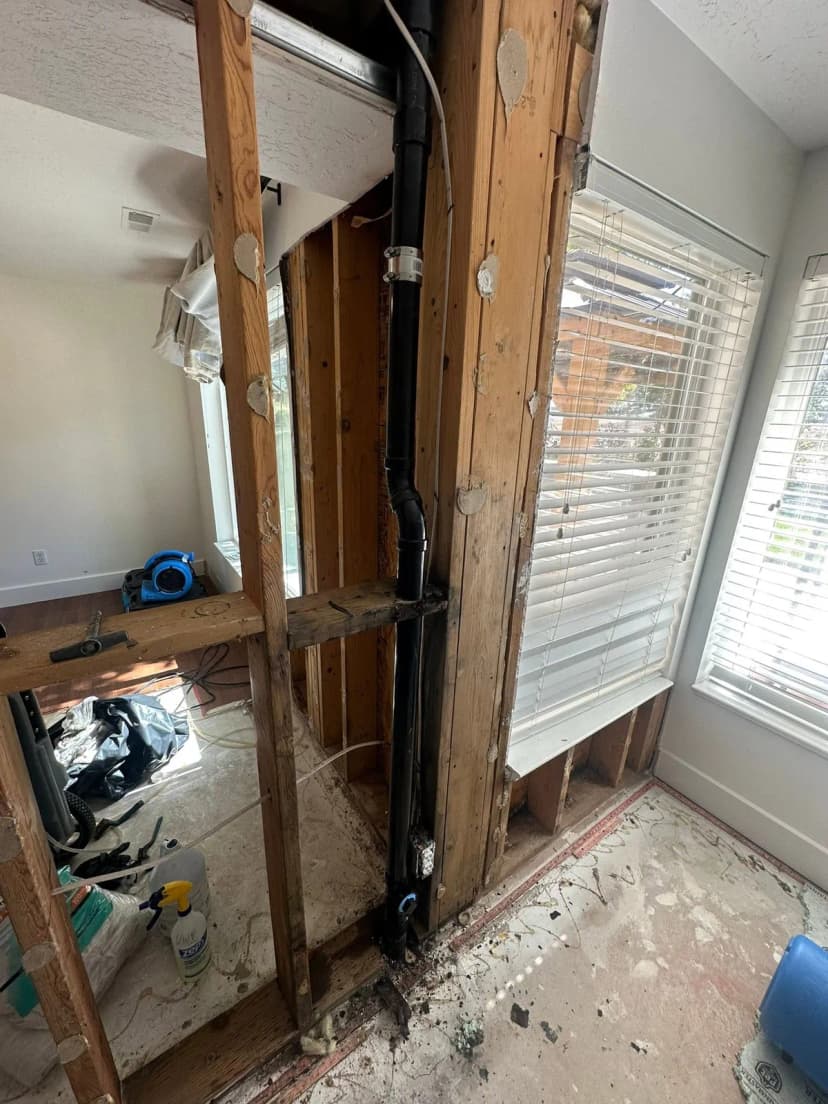
- Problem
- The homeowner said an inspection had failed. We took a look and found no air in the expansion tank.
- What we did
- We removed the old expansion tank and replaced it with a new 2-gallon one.
StormWaters Plumbing serves Farmington from our shop in Lehi. The city lists water hardness of 8 or 10 grains per gallon, depending on the side of 600 North, and the median year built for its homes is 2002. We repair water heaters, find leaks, and clear drains. Our emergency line is answered 24/7, and estimates are free.
We serve homes and businesses across Farmington, from the Clark Lane Historic District to the newer homes west of Highway 89. We are based in Lehi and send plumbers to Farmington from there. Every local fact on this page links to the city, district, state, or federal source it came from.
 Our shop, LehiFarmington · Davis County
From the public record
Asked about most in Farmington
Clogged drains, sewer backups, camera inspections, and sewer line repair, with or without a trench.
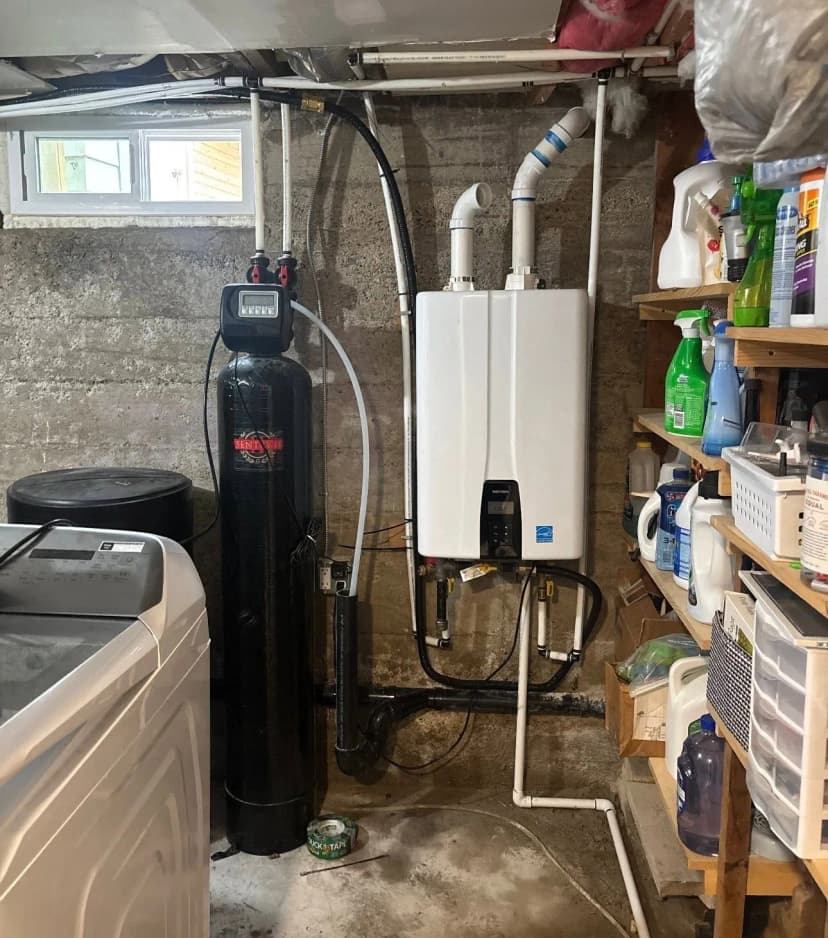
No hot water, a leaking tank, or a switch to tankless. Repair when it makes sense, replacement when it does not.
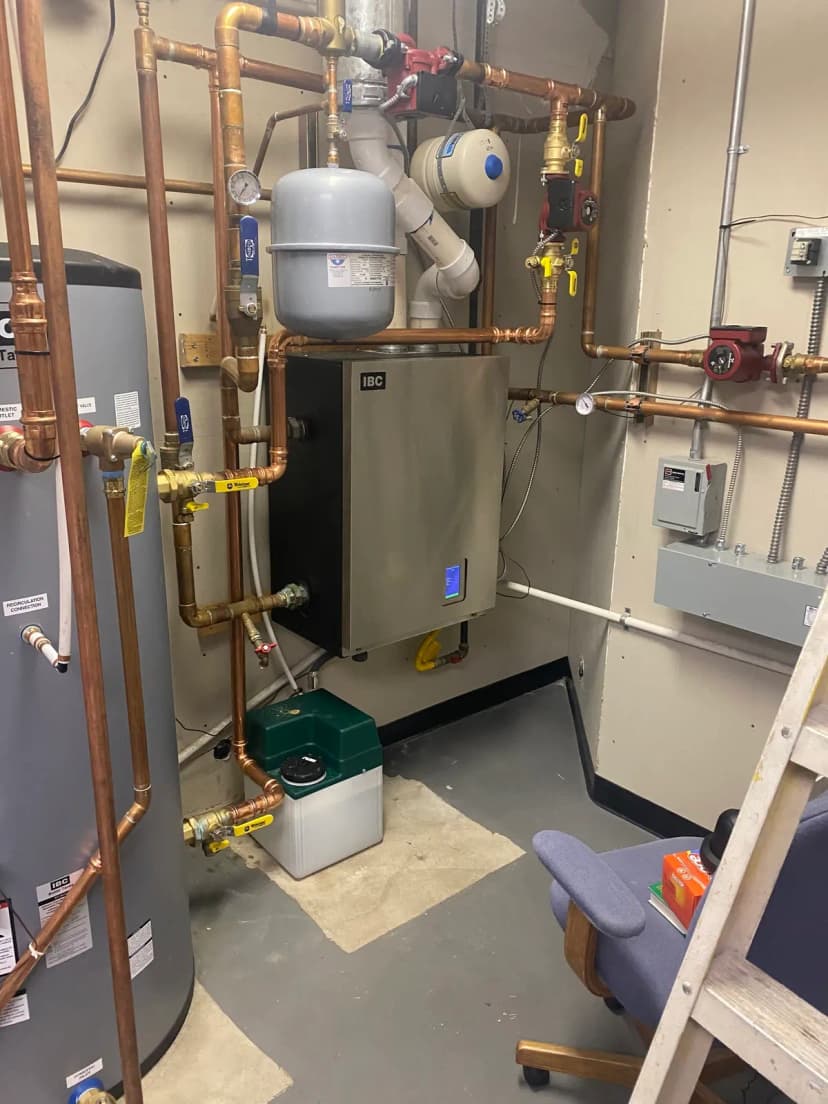
Boiler repair and installation, radiant floor heat, and snowmelt systems for driveways and walks.
Sump pump installation and repair, battery backups, and drainage that moves ground water away from the house.
FarmingtonApril 2026
FarmingtonSeptember 2025
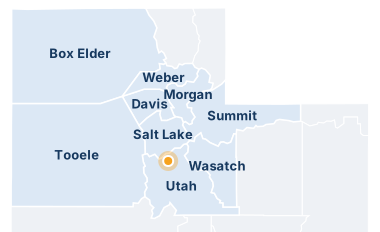
We work in nine counties. Not sure if we reach you? Call and ask.
It depends on which side of 600 North you live on. Farmington City's Water Department page says water services south of 600 North have a hardness of 8 grains per gallon, and services north of 600 North have 10 grains per gallon. The page gives no test date (source). That is about 137 and 171 mg/L, and the U.S. Geological Survey calls water from 121 to 180 mg/L hard (source). The city's Water Quality Report 2025 says 90% of the drinking water comes from four underground wells in various locations throughout the city, and the other 10% comes from Weber Basin (source). The report itself lists no hardness figure. Hard water leaves scale in a water heater tank, and a tank that rumbles or pops as it heats is telling you so. We do water heater repair, and we test the water at your tap before we size a water softener.
You are, from the main in. Farmington City says property owners are responsible for all private service water lines from the public water main to the residence, and for leaks inside the home (source). The city reads its electronic meters every month around the 20th. Its residential flat rate provides 5000 gallons a month, and use above that is billed as an overage. The city lists a running toilet, a water softener recycling frequently, and a leaking faucet among the possible reasons. If your bill is unusually high, the city says to call Public Works to have the meter reading checked. If the read is accurate, it says you may need a plumber or other professional to find the source of a leak. We do leak detection to find the spot before anyone digs, and toilet repair when the toilet is what keeps running.
You own the lateral, and the District owns the main. Sewer service in Farmington comes from Central Davis Sewer District, which says it serves the Farmington, Fruit Heights, and Kaysville areas. The District says it owns all main sewer lines in the streets or in rights of way. It says sewer laterals connecting a home or business are owned, operated, and maintained by the property owner, and are not the District's responsibility (source). So a blockage in the pipe between your house and the main is yours to clear. If sewage is coming up, stop running water and keep people and pets away from it. Farmington City adds that water lines or hoses should never be used to unplug backed up sewer lines (source). We do drain cleaning, and a sewer camera inspection shows where the blockage is and what it is. When the lateral itself has failed, we do sewer line repair.
Yes, if they are connected to the city's drinking water. Farmington City says the Uniform Plumbing Code requires all residential and commercial landscape sprinkling systems connected to the public drinking water system to be equipped with an approved backflow prevention device or assembly. The city names two pressurized irrigation suppliers, Benchland Water District and Weber Basin. That water is untreated, and the city says to always have a complete physical separation between the pressurized irrigation supply and the public drinking water system. It also says every drinking water outlet with a hose attachment, other than water heater drains and clothes washer connections, must have a vacuum breaker (source). The city's April 2025 newsletter says Benchland has begun installing secondary water meters in Farmington, and it encourages residents to make sure their irrigation system has a shut-off valve (source). We do backflow testing for homes and businesses in Farmington.
The 1991–2020 climate normals for the Farmington 3 NW weather station show a normal January low of 21.5°F, and an average of 28.6 January days with a low at or below 32°F (source). Farmington City says January often swings from moderately warm one week to extremely cold the next. Its steps to prevent frozen pipes include keeping the heat above 50 degrees, leaving cabinet doors open so warm air reaches the pipes, letting faucets drip slightly, and insulating pipes in places without proper insulation, such as basements or attics (source). We do winterization for hose bibs, irrigation supply lines, and homes left empty. If a faucet gives only a trickle on a freezing morning, open it and never use an open flame on the pipe. If a pipe has split, close the main water valve and call our emergency line. We thaw frozen pipes and repair the ones that burst.
It can be. The Utah Geological Survey says Davis County and Farmington have a long history of flooding and debris flows. Many of the larger drainages, such as Farmington and Rudd Canyons, are protected by debris basins, but most small drainages are not. On April 6, 2004, thunderstorms caused flooding and debris flows along the east bench between Farmington and Shepard Canyons, and several vehicles, garages, and homes were damaged (source). The Survey says the 1983 Rudd Canyon debris flow left approximately 90,000 cubic yards of sediment and damaged 35 houses (source). No plumbing stops a debris flow. A sump pump handles water that collects at the foundation. If your home has one, test it before spring, and call us for sump pump repair if it does not start. If water is already on the floor, stay out of standing water, and shut off power at the breaker only if you can reach it from a dry spot.
The Census Bureau's 2020 to 2024 estimates put the median year built for Farmington homes at 2002 (source). About half of the homes are older than that. The Farmington General Plan, adopted in September 2025, profiles the city in four quadrants. In the Northeast Quadrant, north of State Street and east of Highway 89, 52% of housing was built from 1960 to 1999 and 13% is older than 1960. In the Northwest Quadrant, north of Clark Lane and west of Highway 89, 18% was built from 1960 to 1999 and less than 1% is older (source). The Clark Lane Historic District has homes dating from 1856, the city says (source). In a house from the 1960s or 1970s, the supply pipe and the drain may be the originals. Pressure that has dropped over the years, or pinhole leaks in more than one place, point to repiping.
We do not have an office in Farmington. Our shop is in Lehi, and our plumbers drive to Farmington from there, whether the job is in the Clark Lane Historic District or west of Highway 89. We do not post an arrival time on this page, because we have not measured one and will not promise a number we cannot keep. When you call, a person tells you when a plumber can be there. For a burst pipe, a sewage backup, or no hot water, call our emergency line. It is answered 24/7. For planned work, such as a backflow test, a sewer camera inspection, or a new water heater, you can book a visit. Estimates are free, and you get the estimate before any work starts. Our work carries a guarantee, and financing is available for larger jobs. The other cities we serve near Farmington are on our Davis County page.
Call or text and a person will answer.
Office Mon to Fri, 7 am to 6 pm. Emergency line 24/7.
Opens in a new tab