


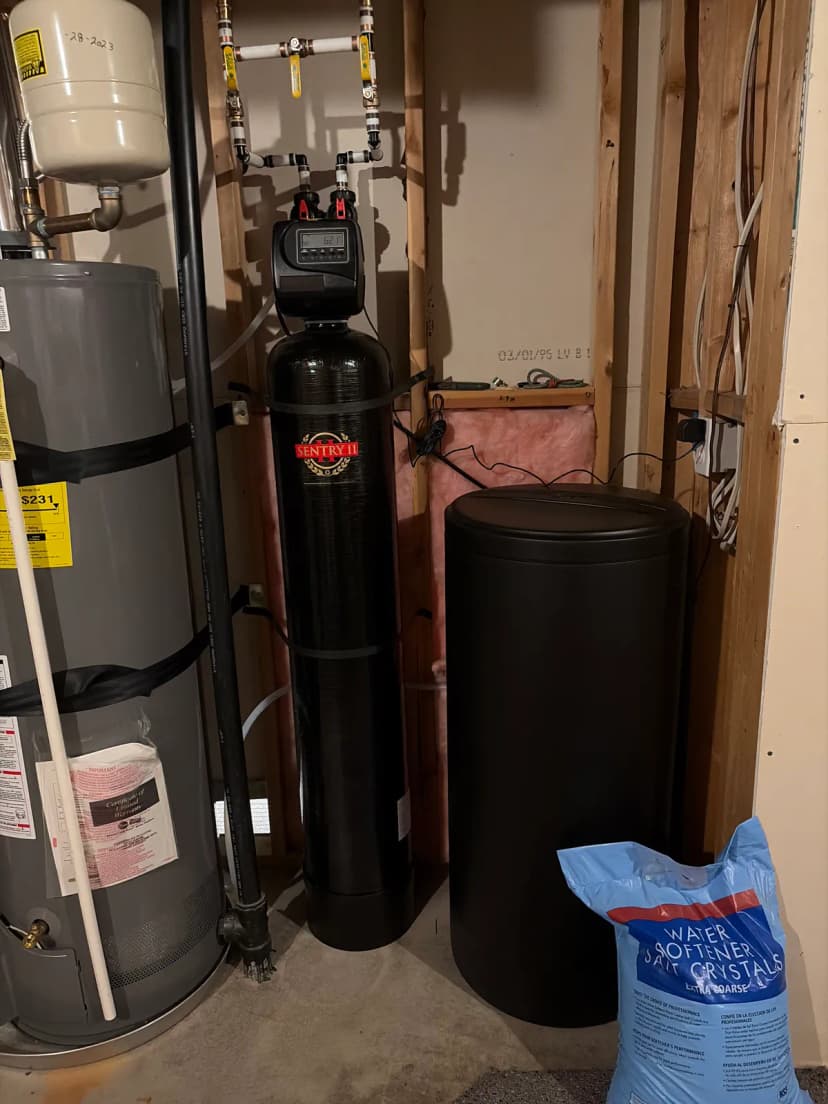
Water Softeners
West JordanSeptember 2026
- Problem
- The customer had a new water softener to replace the old one.
- What we did
- We installed the softener the customer supplied, hauled away the old unit, and added four bags of salt.
A water softener removes the calcium and magnesium that make water hard. Northern Utah water is hard: Provo's 2025 water report gives typical levels of 10–15 grains per gallon. You need a softener if you see scale on fixtures, spots on dishes, or early wear on your water heater. We install and replace water softeners. Estimates are free.
What to expect
The price before any work starts
A free estimate first. No surprise on the bill.
You know who is coming
A text with your plumber's name before we arrive
We show up when we say
If we are running late, you hear from us first
No upsell. No is fine.
We fix what you called about. You decide anything else.
Most northern Utah cities that publish a hardness figure report hard water, and some much harder than others. The U.S. Geological Survey calls water hard above 120 mg/L and very hard above 180 mg/L. That is about 7 and about 10.5 grains per gallon.
Provo's 2025 water report gives typical levels of 10–15 grains per gallon. Salt Lake City's 2026 report lists 8.0 to 12.4 at its three treatment plants. Park City's quarterly tests ran from 9 to 24. Lehi's water quality report lists no hardness figure.
Hardness changes with the water source and the season, and a home on a well can be very different from the city's number. We test the water at your tap before we size a water softener. The table below lists the figures six cities and districts publish.
You need a water softener when hard water leaves minerals behind faster than you can clean them off. The signs are:
Scale does the most harm where water is heated. It coats the inside of tank water heaters and the heat exchangers of tankless ones, so they work harder to heat the same water. A softener protects that equipment and the pipes and valves that feed it.
A salt-based water softener removes hardness by ion exchange. Water flows through a tank of resin beads. The beads hold sodium. As hard water passes, calcium and magnesium stick to the beads, and a small amount of sodium goes into the water in their place. Soft water leaves the tank.
After a while the beads are full of minerals. The softener then cleans itself, a step called regeneration:
Most softeners sold today count the gallons you use and start regeneration when the resin is nearly full, usually at night. Older ones run on a timer. Your part is to keep salt in the brine tank.
A salt-based water softener is the only one of the two that takes the hardness out of the water. For water as hard as northern Utah's, it is the one we recommend for most homes.
A salt-free conditioner leaves the calcium and magnesium in the water. It changes the minerals so that less of them stick to pipes and heating surfaces as scale. It uses no salt, needs no drain, and wastes no water. It does not give you the feel of soft water, and spots on dishes and glass usually stay.
A reverse osmosis filter is a third thing. It makes drinking water at one faucet and does not treat the whole house.
Choose a salt-based softener when you want the scale, the spots, and the soap problems gone. Consider a conditioner when you only want less scale and cannot have a drain or salt.
A water softener installation follows these steps:
With a loop in place, the job is a short visit. Without one, we cut into the main line and run a drain, which takes longer.
We give free estimates and do not post prices. These are the things that change the cost of a water softener:
Financing is available. Ask about it when we write your estimate.
A water softener needs salt, a look inside the tank now and then, and the right settings.
If the softener uses salt but the water still feels hard, call for service.
| Place | Hardness (grains per gallon) | Source |
|---|---|---|
| Orem | 7–25 in city wells and springs; 6.55–9 in treated surface water | City of Orem water quality report posted in 2026 (samples 2018–2025) |
| Park City | 9–24 across eight areas of the system | Park City quarterly water testing, third quarter 2025 through second quarter 2026 |
| Provo | 10–15 | Provo City Water Report 2025 |
| Salt Lake City | 8.0–12.4 at three city treatment plants; 9.6–33.4 in city wells and springs | Salt Lake City Water Quality Report 2026 |
| Saratoga Springs | 8.3 average | City of Saratoga Springs culinary water page (no test date given) |
| Stansbury Park | 22.22 | Stansbury Park Improvement District (no test date given) |
What it costs
A leak behind a wall and a leak under a sink are different jobs, and so are a short gas line and a long one. We look at the work, then give you a price. The estimate is free.
Larger jobs can be paid over time through Wisetack.
See financing optionsThe visit
Tell us what you see. If a pipe is leaking, we tell you which valve to close.
You get a text with your plumber's name before we arrive. Shoe covers go on at the door.
We find the cause, show you what we found, and give you the price.
We clean up, and the work is covered for 1 year.
1-year guarantee
100% satisfaction guarantee for 1 year after service
How the guarantee worksWest JordanSeptember 2026
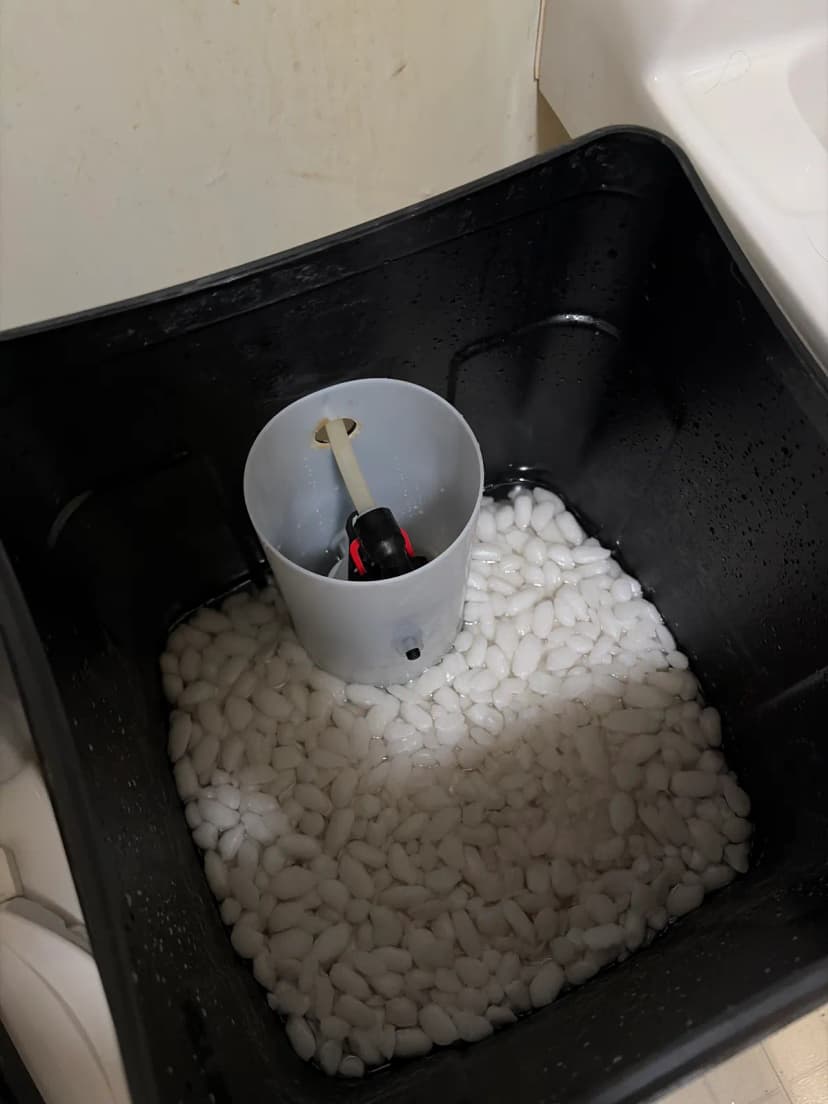
TaylorsvilleOctober 2025
Is yours not here? Call (385) 338-6068 and ask. We would rather answer it than have you guess.
For most people, yes. A water softener adds a small amount of sodium to the water, and the harder the water, the more sodium it adds. If you are on a low-sodium diet, ask your doctor. Two common options are to leave the cold water line to the kitchen sink unsoftened, or to add a reverse osmosis filter for drinking water.
In hard water, it helps a great deal. A tankless water heater pushes water through narrow passages in a heat exchanger, and scale builds up there. Makers of tankless heaters call for regular flushing to remove scale. A water softener cuts down the scale at the source. Provo's 2025 water report gives typical hardness of 10–15 grains per gallon, so we recommend one here.
The size comes from two numbers: how hard your water is, in grains per gallon, and how much water your household uses in a day. Multiply them and you get the grains the water softener has to remove each day. A softener that is too small regenerates constantly. One that is too big costs more than you need. We test the water and do the math.
It depends on how hard your water is and how much water you use, so check the brine tank about once a month. Keep the salt above the water level, and top it off before it runs low. If the salt level in your water softener never drops, look for a salt bridge, a crust that keeps the salt from reaching the water.
Based in Lehi, working in nine counties.
Call or text and a person will answer. Estimates are free.
Office Mon to Fri, 7 am to 6 pm. Emergency line 24/7.
Opens in a new tab