


Outdoor Plumbing and Hose Bibs
OremSeptember 2026
- Problem
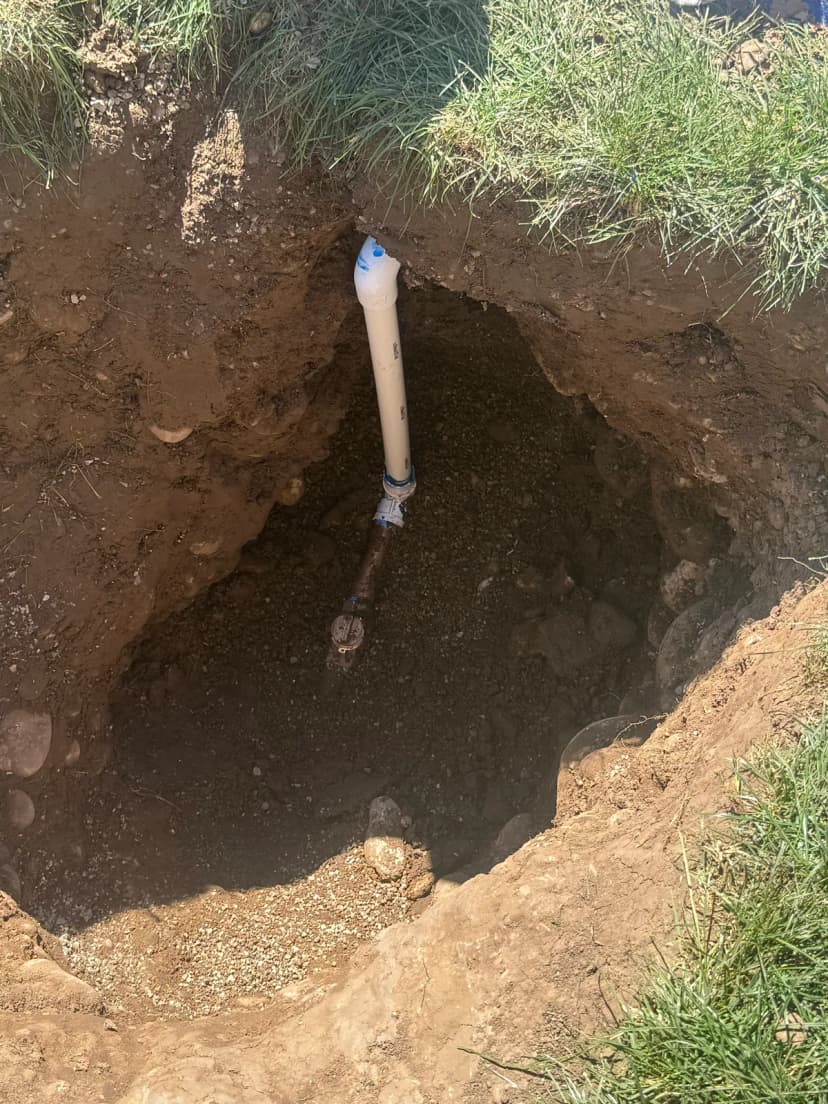
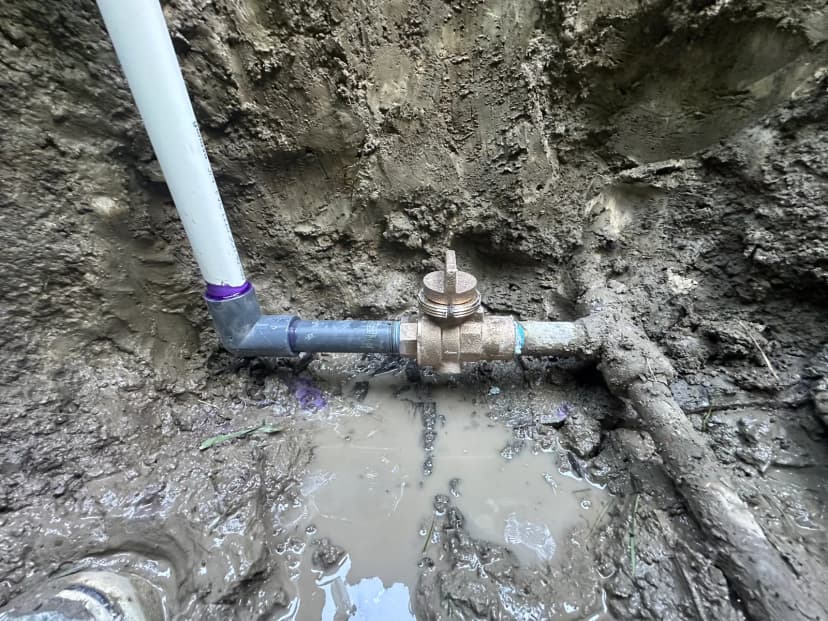
- A stop-and-waste sprinkler valve about 3 feet underground was leaking.
- What we did
- We dug down to the valve and replaced it.
Outdoor plumbing covers the faucets and valves outside your house. That means hose bibs, frost-free faucets, and the shut-off valves that feed them and your sprinklers. Call when a hose bib drips, leaks inside the wall, or split over the winter, or when a valve will not turn. We repair and replace them across northern Utah. Estimates are free.
What to expect
The price before any work starts
A free estimate first. No surprise on the bill.
You know who is coming
A text with your plumber's name before we arrive
We show up when we say
If we are running late, you hear from us first
No upsell. No is fine.
We fix what you called about. You decide anything else.
A hose bib leaks from one of a few places, and each place points to a different worn part.
A drip at the spout wastes water all season. A leak inside the wall soaks the framing and the insulation every time the faucet runs, so that one should not wait.
A frost-free hose bib keeps its water inside the warm part of the house. The handle is outside, but it turns a long stem. The valve that stops the water sits at the far end of a tube, several inches inside the wall. When you turn the faucet off, the water left in the tube drains out through the spout. An empty tube has nothing in it to freeze.
A hose changes that. With a hose, a splitter, or a spray nozzle still attached, the tube cannot drain. The trapped water freezes, expands, and splits the tube. Nothing leaks while the faucet is off, because the split is on the dry side of the valve. You find out in spring, when you turn the faucet on and water runs inside the wall.
Freezing nights are routine here. The 1991–2020 climate normals for the Salt Lake City International Airport weather station show a normal January low of 24.2°F (source). Take every hose off in fall. If a pipe has already split, see frozen and burst pipes.
Repair a hose bib when a small wearing part has failed. Replace it when the body, the tube, or the seat is damaged.
Repair makes sense for:
Replacement makes sense when:
When an old faucet is already apart and several parts are worn, a new faucet is often the better use of the visit. We look at the faucet and tell you which one we recommend and why.
A stop-and-waste valve is a shut-off valve with a small drain opening on its outlet side. Closing the valve stops the water. On the buried kind, it also opens the drain, so the water left in the pipe past the valve can run out. An empty pipe cannot freeze and split.
You find one in two places. On a sprinkler supply line, it is usually buried in the yard and turned from the surface with a long key. In a basement, it can be the valve on the pipe to an older outdoor faucet, with a small drain cap on its side.
These valves sit untouched for months, so they seize. A buried one has to be fully open or fully closed. Left part way, it leaks out of its drain underground. Do not force a valve that will not turn.
Fall is when it matters. Lehi City says pressurized irrigation users must turn off their connections by October 15 each year (source). Our winterization page covers the fall shut-down.
Culinary water is treated drinking water. Secondary water, which some cities call pressurized irrigation, is untreated water that comes through its own pipes for lawns and gardens. American Fork says its pressurized irrigation water is non-potable and should never be used for drinking (source).
The two are kept apart because of backflow. If they are tied together, a pressure drop on the drinking water side can pull untreated water into your house and into the city main. So:
We work on hose bibs, outdoor shut-off valves, and the water supply to an irrigation system. For sprinkler lines and heads, call and ask.
Replacing an outdoor faucet means working on both sides of the wall. The steps are:
Adding a faucet where there was none also means a new pipe from the nearest cold water line. A gas line to a grill or a fire pit is separate work. See gas lines.
We give free estimates and do not post prices. These are the things that change the cost of hose bib and outdoor faucet work:
We tell you the cost before we start the work.
| Symptom | Likely cause | Usual fix |
|---|---|---|
| Drips from the spout when off | Worn washer or pitted seat | Replace the washer, or the faucet if the seat is damaged |
| Leaks at the handle when on | Loose or worn stem packing | Tighten the packing nut or repack the stem |
| Sprays from the cap on top while running | Worn vacuum breaker | Replace the vacuum breaker |
| Water inside the wall or basement when on | Faucet tube or pipe split by freezing | Replace the faucet and repair the pipe |
| Handle spins and the water does not stop | Stripped stem | Replace the stem or the faucet |
| Stop-and-waste valve will not turn | Seized or corroded valve | Replace the valve |
| Wet ground around a buried valve | Valve left part way open, or a leak at the valve | Open or close it fully, or replace the valve |
What it costs
A leak behind a wall and a leak under a sink are different jobs, and so are a short gas line and a long one. We look at the work, then give you a price. The estimate is free.
Larger jobs can be paid over time through Wisetack.
See financing optionsThe visit
Tell us what you see. If a pipe is leaking, we tell you which valve to close.
You get a text with your plumber's name before we arrive. Shoe covers go on at the door.
We find the cause, show you what we found, and give you the price.
We clean up, and the work is covered for 1 year.
1-year guarantee
100% satisfaction guarantee for 1 year after service
How the guarantee worksOremSeptember 2026
SandyOctober 2025
MapletonJuly 2026
Eagle MountainJune 2026
Saratoga SpringsApril 2026
HerrimanOctober 2025
LehiOctober 2025
Is yours not here? Call (385) 338-6068 and ask. We would rather answer it than have you guess.
Take the hose off first. A frost-free faucet needs nothing more. A standard faucet should have its own shut-off valve inside the house, usually in the basement on the pipe that leads to it. Close that valve, then open the outdoor faucet and leave it open so the pipe can drain. If you cannot find an inside valve, a plumber can add one.
The cap on top of an outdoor faucet is a vacuum breaker. It lets air in so that hose water cannot be pulled back into your drinking water. A short spurt when you turn the faucet off is normal. That is the vacuum breaker draining. Steady spraying or dripping from the cap while the water runs means its seal is worn, and the vacuum breaker needs to be replaced.
Test it in spring before you leave a hose running. Have one person turn the faucet on while another watches the inside of that wall, in the basement or the crawl space if you can see it. Weak flow outside, the sound of water in the wall, or water showing up inside means the faucet or its pipe split. Turn it off and leave it off until it is replaced.
A hose bib can go on most outside walls, as long as a cold water line can reach the spot. The easy places are walls with an unfinished basement or a crawl space behind them. A finished room, a brick or stone wall, or a long run from the nearest water line makes the job bigger. A frost-free faucet also needs room behind the wall for its tube.
Based in Lehi, working in nine counties.
Call or text and a person will answer. Estimates are free.
Office Mon to Fri, 7 am to 6 pm. Emergency line 24/7.
Opens in a new tab